Saturday, 9 June 2018

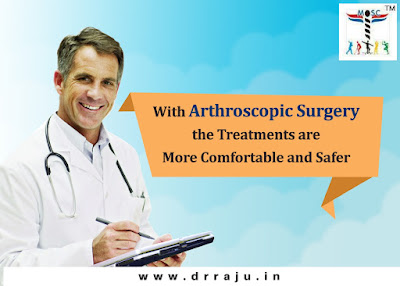
Knee Arthroscopy Is Not A Big Deal

Can you imagine stretching out your legs without the efficient movement of your knee joints? No. Knee joint is the largest joint in our body and it’s improper functioning would definitely lead to the ailments related to activities such as walking and running. To sort out knee problems, you need a good clinical evaluation, X-rays & sometimes even MRI. Most knee diseases are managed through good physiotherapy & medications. Sometimes one needs an arthroscopy. Shree Meenakshi Orthopaedics & Sports Medicine clinic offers all such solutions. 
http://drraju.in/treatments-offered/arthroscopy/knee-arthroscopy/index.html

What is Knee Arthroscopy?


It involves looking at the interior of the knee joint through a 4 mm lens called the arthroscope. A magnified view of the joint’s interior is obtained & one can diagnose & treat with a high level of precision. 


Some of the knee conditions that can be treated are:

  • Torn meniscus
  • Baker’s cyst
  • Misaligned patella & unstable patella
  • Swollen synovium
  • Torn cartilage
  • Torn knee ligaments especially the ACL

How to be geared up for a knee arthroscopy?


The patient should be willing to share with the doctor about the medications and prescriptions that he is currently taking. Twelve hours before the surgery, he has to refrain from eating and drinking. Sometimes doctors prescribe pain medication to decrease post-operative discomfort. 

http://drraju.in/treatments-offered/arthroscopy/knee-arthroscopy/index.html

How is knee arthroscopy carried out?


Anaesthesia (local, regional, general) is given to the patient. Certain incisions are made on the knee and salt water (sterile normal saline) is pumped into it so the knee can be expanded and enable the doctor to view the interior part of the joint too. Then, the arthroscope is introduced in any of the incisions and using the camera the doctor sees the inside of the joint. The images are seen on the monitor. Once diagnosis is made, the same incisions are used to treat the problem. Finally, the salt water is drained off and the cuts are closed. 

A physical exercise to be followed regularly, will be recommended by the doctor after a few appointments with him after the surgery. This would help to restore the strength of the muscles too.

Are you searching for the best arthroscopic knee surgery in India and the minimum Knee arthroscopy cost in Delhi? Don’t waste your time, come directly to the Shree Meenakshi Orthopaedics & Sports Medicine clinic and get the your knee fixed at a feasible rate. 
http://drraju.in/contactus/index.html
 
Mail Us @ drrajueswaran@gmail.com
VIsit US @ drraju.in
Book Your Appointments Here : drraju.in/book-appointment

Tuesday, 15 May 2018

Stay Away From Knee Pain With ACL Reconstruction Surgery

Have you ever experienced the sudden instability in your knees while walking, running, or descending stairs? When it comes to your knees, do not dare to take a risk, for you will have to repay heavily for the same later. Fret not, Shree Meenakshi Orthopedics & Sports Medicine Clinic, the best orthopaedic hospital in India is here to get the best diagnostic results for you and also to seek out the right solution.


Anterior Cruciate Ligament (ACL) when gets tampered due to injuries demand a replacement called ACL replacement surgery. ACL reconstruction is done to fix the ligament at the centre of the knee. Are you searching for the best ACL repair surgey in India? Shree Meenakshi Orthopedics & Sports Medicine Clinic is here for your help.

Once our doctors had finalized the symptoms for the tear and injury of ACL, the surgery is done as early as possible. ACL reconstruction is done with a prior general anesthesia. The tissue for the replacement is usually taken from the knee itself, which is known as an autograft. The surgery is done with the help of diagnostic arthroscopy. A scope with a camera attached to the end is inserted into the knee through a small incision so as to help the surgeon get a wider vision of the knee and to check the ligaments and surrounding muscles.

http://drraju.in/treatments-offered/sports-exercise-medicine-sem/acl-reconstruction/index.html

Grafts from hamstring are the best choice for ACL reconstruction. Hamstring is the muscle that runs behind your thighs.  Using hamstring grafts are helpful in reducing pain followed by the surgery, to have a faster recovery. The incision done for the graft is relatively small in the case of the hamstring.

We, at Shree Meenakshi Orthopedics & Sports Medicine Clinic, take enough care to provide you with the best medical support you need during your weary times. We, are known as the best providers of ACL reconstruction surgery in Delhi, is here with the best solutions for your orthopaedic casualties and sports injuries.

http://drraju.in/contactus/index.html
Mail Us @ drrajueswaran@gmail.com
Visit Us @ drraju.in

Friday, 9 February 2018

Sports Injury Treatments at the Best in the Field

A look into Sport Injuries..

The injuries during some athletic activities or physical exertion are known as sports injuries. They can after effect from accidents, poor training, address in practice, bare equipment, and overuse of an accurate physical part. The sport injuries treatments are necessary for avoiding the major injuries like brain injuries, fracture, etc.


Sports Injury Prevention

Prevention is the best cure. As in all cases, prevention of dangerous circumstances that may cause injuries is the best way to avoid getting hurt. There are mainly two ways to get prevent from sport injuries.

1) Use of proper sports equipment: Properly fitting, sport-specific shoes can help to control the movements of leg, similarly the use of helmets, face masks and protecting padding can also help in preventing injuires to a great extent.

2) Learning and following the rules and  with an effective warm-up and cooling down stretching can help the athlete to perform the action smoothly and safely.

Sports Injury Treatments
sports injury treatment

The Advancement in treatment technologies has simplified sports injury management. Simple Sports injuries can be cured with complete rest, ice bag, or by elevating the injured area while complicated injuries can be managed with surgeries.

It is highly recommended to get the proper medical care even when the first sign of the sports injury occurs as it may lead to more damages while doing any activity.

Shree Meenakshi Orthopedics & Sports Medicine Clinic is a well-renowned Sports Injury Clinic in New Delhi for treating all kinds of sports injuries. Dr. Raju is a famous Sports Injury Doctor in New Delhi who is well experienced in handling simple and complex sports injuries with utmost care.
contact us
Mail us @ drrajueswaran@gmail.com
Visit @ drraju.in

Sunday, 7 January 2018

Knee Replacement - Experience a painless Journey

Knee pain is a huge sufferance, especially for elders. During the aging process, bones and joints start to lose their strength and finally end up with debilitation. The final option to get relieved from the distressed pain is Knee Replacement Surgery or Arthroplasty.


Knee Joint Replacement is an operative procedure to resurface the damaged knee due to arthritis. Either plastic parts or metal is utilized to cover the knee joint bones with a kneecap. Knee Replacement Surgery is recommended to a person who has a severe knee injury or arthritis.

What are the affecting factors of knee joint?
  • Osteoarthritis is a kind of degenerative joint disease. It mostly affects the adult and older people. This condition may cause a break in the joint cartilages and adjacent bones in the knee. 
  • Rheumatoid arthritis is an inflammatory condition of the synovial membrane. It results in synovial fluid inflammation which might lead to pain and stiffness. 
  • Traumatic arthritis is caused due to severe injury which may damage the knee cartilage.
The objective of the Knee Replacement surgery is to resurface the damaged knee joint parts and relieve excruciating pain.

Pre-surgery Examination

Before the Surgery, the Orthopedic Surgeon will analyze the patient’s medical history, do the physical examination in order to evaluate the strength, stability, and range of motion of the knee. X-ray / CT/ MRI will help him to analyze the severity of the damage.


How is a Knee replacement surgery performed?

The Orthopedic Surgeon will make an incision up to 10 inches long in the affected knee area. Then, he will remove the damaged surfaces and resurface the knee joint with the prosthesis. Though plastic and metal prosthesis are available, most commonly used is a cemented prosthesis. This cemented prosthesis is attached to the bone with surgical cement. The surgeon will bend and rotate the knee to ensure its smooth functionality before closing the incision. Then, the incision is closed with staples or surgical sutures. To remove the fluid in the surgical site, a drainer may be inserted. Finally, a sterile dressing is done. The knee joint replacement will be performed about 2 hours.

Post-Surgery-Rehabilitation

The next day of the surgery, a physiotherapist will teach some knee exercises to the patient. Doing such exercises will relieve the surgical pain, stiffness, and improve the mobility of the knee. The patient can start his normal works after 6 weeks. However, he is advised not to involve with high-impact activities. The patient will be prescribed antibiotics, painkillers and vitamin tablets for certain days or months. Then, he shall go for the follow-up as advised.

Shree Meenakshi Orthopedics & Sports Medicine Clinic is a well-renowned Orthopedic Hospital New Delhi who performs all kind of orthopedic surgeries. Dr. Raju is a famous Orthopedic Surgeon Delhi who performed a number of Knee Replacement Surgery New Delhi successfully.


More Details, Visit: drraju.in
Mail us: drrajueswaran@gmail.com

Wednesday, 15 November 2017

Do you need a Kneecap ??

Yes & no.You certainly don't need a kneecap or hinged brace for arthritis. You are much better off & much more comfortable doing exercises & making subtle changes in your lifestyle. If you have end stages knee arthritis, then also you won't benefit from any braces, you may be better off getting a knee replacement.

If we are able to diagnose isolated arthritis of one half of the knee replacement.
If we are able to diagnose isolated arthritis of one half of the knee, then you will benefit from an offloading brace.The problem with the offloading brace is that it also offloads your purse! Most such braces are very expensive.Another problem is that you need to wear them throughout the day, which may be a challenge n our mostly tropical climate & if you are fond of tight clothing.Sometimes these braces simply don't fit us diameters & that causes the brace to lift off the skin in some places.An ill-fitting brace will not work for you & might actually be counterproductive by constantly rubbing against the skin & eventually ulcerating it!


How Soon will the braces start having its effect?


We are all in a terrible hurry to see results, especially after spending a fortune on the offloading brace. Results in terms of pain relief take time . just like a new shoe, the knee may feel sore. Some people don't obtain that much of pain, but their mobility & joint flexibility improves. In a nutshell, it is unrealistic to expect magic from the braces. Be prepared to wait out a few weeks for its effects to kick in.


Are offloading braces available in India?


Yes, but only on a doctors prescription.All the braces available off the shelf are mostly useless from afar as knee osteoarthritis.

Shree Meenakshi Orthopedics & Sports Medicine Clinic has all the modern equipment and techniques to perform all kind of orthopedic surgery  Dr. Raju is a well-known surgeon for knee injuries and one of the best orthopedic doctors in New Delhi. The hospital has a good hold on knee surgeries and has a high rate of successful surgeries.


Mail us @  drrajueswaran@gmail.com
Visit us : drraju.in

Wednesday, 25 October 2017

The anatomy of a push-up


If your only upper-body movement is moving beer to your lips, then this one move is sure to get you on the path to fitness and a better body

The push-up is one of those basic exercises, casually thrown at military cadets as a punishment during their training days, in batches of 100s. In fact, says Dr Raju Easwaran, a sports surgeon, the single-arm push-up (with one arm behind the back) is an important yardstick for most commando training around the world. If you’re not going commando, here’s a guide to doing one and getting yourself toned: “It works almost every muscle in the chest, upper back and arms, but it also helps build the core muscles,” says Dr Easwaran, who is a senior consultant with Max Hospitals in Delhi.

“This do-anywhere body-weight exercise has multiple variants, so it’s versatile enough for you to start with the simple wall push-up, used as a rehabilitation tool by physiotherapists for people recovering from a shoulder injury or surgery,” he says.

You could then progress to placing your arms at a higher level (like a step), or performing it with the knees folded, quads on the ground. When starting off, you may use a push-up handle for stability. Avoid it if you have a rotator cuff problem (the muscles around the shoulder). For the rest of us, “Ants can lift many times their weight; surely we should be able to lift at least our own,” says Dr Easwaran. Give yourself 45 days to do a regular push-up.


3 STEPS TO

DOING IT RIGHT


Praveen Nair, Mumbai-based personal trainer to Bollywood stars like Shraddha Kapoor, Aditya Roy Kapoor and Sushant Singh Rajput in the past, gives us the perfect push-up position.

Get your start straight: Lie down on the ground. Keep feet hip-width apart and get yourself up on the strength of your arms and chest. Stay on your toes and position hands slightly wider than the shoulders, forming a 90-degree angle to the ground. This is the high plank position. Place your hands flat, spreading the fingers out and grounding them. Align your neck and spine in a way that they form a straight line.

Get your muscles and joints ready: Imagine squeezing something under your arm. Your shoulders should be drawn back rather than towards the ears. Be conscious of engaging your core: clenching the glutes and tightening the abs. Your weight will hinge on the three joints: shoulder, elbow and wrist, so keep your hands steady.

Breathe steadily: Inhale as you go down, keeping the elbows close to the body, and not fanning out. This is called an eccentric muscle contraction, when muscles are lengthening and you are building strength. Exhale on the way up. This is called a concentric muscle movement, when muscles are shortened, with some weight on them. Studies have shown that eccentric movements are more important than concentric to build muscles mass. Simply put, this means that it is in the downward movement of a push-up, towards gravity that you’re actually building your body.


3 MISTAKES


NEWBIES MAKE


Nisha Varma, an American College of Sports Medicine exercise physiologist and a Reebok Master Trainer based out of Pune, points to common errors people make.

The progression is too quick: Perhaps because of the proliferation of online videos that glamourise the advanced forms, people end up doing a single-hand push-up teetering to one side. Focus on posture, progression and your own fitness level so you don’t injure yourself.

The lower back falls in: When you dip, the hip, stomach, and knees touch the floor or are lowered before the chest comes down. This shows lack of core control.

The push-up is not completed fully: When a person does not come back to the high plank position, and comes up just about 80%, the serratus anterior, muscles deep within the chest, are not activated. Again, if you don’t go down completely, you’re not experiencing the full range of motion.

BUILD It UP


3 EXERCISES TO


Vinod Channa, an Action-certified personal trainer to Bollywood stars Shilpa Shetty and John Abraham, says it’s necessary to develop mobility in the joints and strength in the muscles before you actually begin a push-up.

Bench press: Lift what you can, even 2 kg, either dumbbells or a bar. Get comfortable doing 10 reps; progress to doing 2 sets, then 3. Increase weight and sets gradually. This will build strength in your chest, arms (especially the triceps) and shoulders.

Planks: Hold a high plank for 10 seconds and build to 30 seconds. Introduce the forearm plank and again progress from 10 seconds. Go on to the side plank. These will strengthen the core.

Mobilisation: Before you begin, warm up the muscles and joints, so you don’t get injured. Do about 10-15 rotations of the neck, shoulders, wrists, hips and ankles.

More Details About Doctor

Visit us :drraju.in
Mail us :drrajueswaran@gmail.com

Friday, 4 August 2017

Are you Suffering from Pain in Meniscus?

A meniscus is a part of cartilage that gives a cushion between the femur (thighbone) and tibia (shinbone). In the each knee joint, there are two menisci which can be torn or damaged during activities. The meniscus can be torn and cause pressure or direct contact from a forced rotation or twist during activities. Heavy lifting, sudden turn or pivot or deep squatting can cause meniscus tear injury. Normally, sports person or athletes are at the risk for meniscus tear but it is also quite common in normal people too.
http://drraju.in/treatments-offered/arthroscopy/knee-arthroscopy/meniscus-injury/index.html


The meniscus is gradually weakened with the age and cause stiffness and pain in the joints. Older people experiences a meniscus tear due to degeneration as the knee cartilage becomes thinner and weaker with the age.
The symptoms of meniscus tear are
  • Having pain when touch the area
  • Swelling
  • Difficulty in moving knee 
  • Difficulty in motion
  • Feeling of knee catching or locking
A patient may experiences a popping or slipping sensation, which is a true indication that part of cartilage has become loose and blocking the knee joint. If a person experiences any of these signs, it is good to consult with a doctor. The treatment options for meniscus tear can vary from home remedies to outpatient surgery which is completely depends on the severity of the injury.
If a person is not responding to the normal treatment then doctor may suggest arthroscopic surgery. In the surgery, the surgeon will make a tiny incision in the knee and insert tools and a camera to repair or trim away the damaged meniscus. The entire surgery will takes an hour and so. The patient can go home same day of the surgery however, full recovery will take time. Physical exercises and proper rest is recommended after the surgery. It takes at least six weeks to complete recovery. Knee brace or crutches are suggested to wear during this time period.
Shree Meenakshi Orthopedics & Sports Medicine Clinic,  has all the modern equipments and techniques to perform surgery for meniscus tear treatment in New Delhi. Dr. Raju is a well-known surgeon for knee injuries and one of the best  orthopaedic doctor in new delhi . The hospital has a good hold on knee surgeries and has a high rate of successful surgeries.

 visit us:drraju.in
Mail us:drrajueswaran@gmail.com


http://drraju.in/contactus/index.html

Monday, 31 July 2017

Make your best Movement by Physiotherapy

Physiotherapy involves specifically designed exercise for treating injuries, illness, condition or protect from any future health problems. Physiotherapy exercises can improve the ability of body parts that have been affected by disease or injury. Physiotherapy generally recommended movement and exercises to provide support in improving mobility and function. The objective of physiotherapy is to develop, maintain, and restore the extreme functional capability of a person. Physiotherapy uses a person’s health history to analyse and develop a management plan and provides exercise according to the person’s capability. Physiotherapy can treat a wide variety of medical conditions, such as
  • Cardiopulmonary conditions such as cystic fibrosis
  • Hand therapy for conditions
  • Neurological conditions such as spinal cord injuries, stroke
  • Musculoskeletal dysfunction such as back pain
  • Sports associated injuries such as concussion

http://www.drraju.in/treatments-offered/physiotherapy.html

Women’s health and pelvic floor dysfunction such as 
  • urinary infections
  • Pediatric conditions such as cerebral palsy
  • Diabetic ulcers
  • Burns and wounds
  • No need of surgery
  • Effective pain management
  • Improve movement and mobility
  • Recover from trauma or injury
  • Recover from paralysis or stroke
  • Managing age related medical problems
There are various types of physiotherapy methods are available such as orthopedic, geriatric, neurological physical, cardiovascular and pulmonary, pediatric or wound care, which is recommended according to the patient condition and position. Physiotherapy also includes electrical stimulation, phonophoresis, stimulation, heat, moist heat and cold therapy, and light therapy.

Physiotherapy promotes use of hands to manipulate, mobilize and massage the body parts. Physiotherapy provides relieve in pain, improves blood circulation, improves body movement, and promotes body relaxation. Physiotherapy helps in keeping the joints movement smooth and provide strengthen to the surrounding muscles. People are now recognizing physiotherapy as a holistic healing method to get a healthier and active life.

Shree Meenakshi Orthopedics & Sports Medicine Clinic, New Delhi provides best treatment in physiotherapy. The clinic has trained physiotherapist and provides best treatment method to their patients.


Visit us:drraju.in
Mail us:drrajueswaran@gmail.com

http://drraju.in/contactus/index.html

Wednesday, 14 June 2017

Successfully Treating Sports Injuries..

Orthopedics or Orthopedic surgery is mainly dealing with conditions that involves the musculoskeletal system. Sports medicine is one of the sub-specialties of orthopedics. Sports medicine includes prevention, diagnosis, treatment and rehabilitation of injuries that a person received during athletic activity. The main objective of the treatment is to cure and rehabilitate the patient's injuries so that they can smoothly perform their daily activities quickly. 

http://drraju.in/conditions-treated/sports-exercise-medicine-sem/index.html


Athletes are more prone to orthopedic injuries because of the risk of fall, wear and tear, or accidents associated with sports activities. Generally, orthopedic injuries include severe pain, stress fracture, stretching or tearing of internal structures. It is good to take precautions to protect the body while playing sports. There are many physicians who help the patient to regain the higher use of the injured joint and limb. The physicians received specialized training to diagnosis, treatment, and prevention of sports injuries. Dr. Raju Easwaran is one of the best sports medicine doctor in India. The doctors treated common injuries such as

  • ACL Tears
  • Muscle cramps
  • Fractures
  • Sprains and strains
  • Stress fractures
  • Muscle contusions


Treatments in sports medicine includes
  • Surgery
  • Orthotics
  • Physical therapy
  • Rest
It is essential to get a proper medical attention while receiving primary symptoms of a sports injury because delay in medical attention can lead to even more damage of muscles or limbs.

Shree Meenakshi Orthopedics & Sports Medicine Clinic provides best treatment for sport injuries in New Delhi. The clinic offers a wide range of facilities  to heal sports injuries and protects from any possible future injuries as well. Dr. Raju Easwaran is a highly qualified and experienced doctor for treating sports injuries.
http://drraju.in/contactus/index.html

Visit Us : drraju.in
Mail Us : drrajueswaran@gmail.com

Tuesday, 16 May 2017

Effective Treatment for Arthritis

What does arthritis mean?
Arthritis is derived from the Greek words "Arthros" meaning joint & "itis" meaning inflammation. Any inflammation/ irritation/wear & tear of the joint is called arthritis. In the initial stages arthritis results in pain & stiffness of the joint. Later on the muscles around the joint weaken & become smaller in size. Towards the end, the joint loses most of its useful movement & the bone develops deformities.
What are the causes of arthritis?
Broadly speaking arthritis is of two main types; inflammatory arthritis & non inflammatory arthritis. The more common non-inflammatory arthritis is also known as osteoarthritis is due to the age related wear & tear of the joint cartilage. The less common inflammatory arthritis is due to the body producing antibodies to the joint cartilage. The body reacts against its own tissue & causes widespread damage to the joints.
Common types of Arthritis
  • Osteoarthritis
  • Rheumatoid Arthritis
http://drsantpure.com/arthritis-osteoarthritis.html

What are the symptoms of osteoarthritis?
lt depends on the joint affected. If knee is affected, it causes pain in the knee, with decreased ability to walk & run. Stiffness of the knees makes simple things like getting into a chair or getting out of it difficult. Stair climbing also becomes increasingly difficult. In the spine, pain is brought on by bending. Sometimes the tiny nerve endings that branch off from the spinal cord & travel in various directions can get pinched by excess bone formation that is seen with arthritis. This results in numbness & tingling in the arms & legs depending on the area affected (neck vs low back). Hip arthritis makes sitting difficult &there is pain especially in the night. Finger arthritis makes down fine things difficult like turning a key, holding a pen or a spoon to eat.
What is osteoarthritis?
It is the most common form of arthritis affecting our joints. Really speaking it is not a disease at all ! It is simply a manifestation of ageing. As me grow older our joints undergo wear & tear. Normally each of our joints has a cushion of variable thickness at its ends called, the cartilage. As we age, the thickness of the cartilage decreases, forcing raw bone to come in contact with raw bone, thereby leading to pain. Our joints have another protective mechanism called the "synovial fluid”. In our youth, healthy thick viscous synovial fluid is produced which adds to this Iubrication. As we age, our joints produce copious amounts of less viscous watery synocial fluid that is Iess efficient in lubricating the joint.The reason why we develop arthritis is not fully known. Almost any joint can be effected, the commonest being the knees, hips, neck, lower back & the fingers.
Usually through a good clinical history & detailed examination, one can diagnose osteoarthritis. Sometimes blood tests may be required to distinguish if from the more serious inflammatory arthritis. X rays will be required in all instances to assess the stage of the disease.Very rarely MRl may also be required in addition to study the soft tissues around the joint.
How is osteoarthritis treated?
Once the smooth cartilage of the joint is destroyed, it cannot be replaced by any known modern treatment. However, if one keeps the muscles around a joint strong through exercise, the ill effects of the lost cartilage can be minimised.

Physiotherapy is the cornerstone of treatment of osteoarthritis. In the knee it means doing what we call the quadriceps & hamstring exercises, for the hip the muscle on the side & back or the hip (abdurtors and gluteus maximus) need to be strengthened, in  the spine the muscles on either side of the centre (paraspinal muscles) are strengthened & for the fingers, handgrip exercises are prescribed, Water based exercise (swimming) are far superior to land based exercises for osteoarthritis of almost any joint. Immersion in water makes our body lighter & restores the lost flexibility to our muscles and tendons. Light resistance training with weights/ theraband is also recommended to increase muscle strength. Weight loss helps immensely by offloading the sore joints. Applying hot packs helps soothe the muscles around the joint. For acute onset pains, Ice packs are
recommended. Application of an ointment or a spray always helps, The physical therapist also use ultrasound, tiny pulses of electric current (TENS) and a special form of deep heat to further help heal the pain. You should take simple precautions like not doing activities like squatting & cross legged sitting. Using a stick for knee and hip arthritis is also very helpful

Anti-nfIammatory medicines (loosely called pain killers) are also prescribed judiciously for a short period to help relieve the pain & inflammation of the sore joints. Prolonged intake of these medicines is harmful for the heart, stomach & kidneys. In case you feel the need to take these medicines on a daily basis, you may be suffering from an advanced stage of the disease & might benefit from a joint replacement, Collagen powders are increasingly being used for the treatment of osteoarthritis of the knee. They are contained in a sachet & are meant to be dissolved in a cup of lukewarm water & gulped down on a daily basis for 3-6 months. They have a role to play in early arthritis, once the disease is advanced, they have little to no therapeutic effect.

Newer therapies like willow bark extract are about to enter the market & will usher in an exciting phase of naturally occurring plant based pain relief medications. These medicines relieve pain & unlike the mainstream painkillers, they are virtually devoid of all major side effects.


http://drraju.in/contactus/index.html


Visit Us: http://drraju.in
Email Us: drrajueswaran@gmail.com

Wednesday, 26 April 2017

Treatment for Ankle Pain

There are many structures present at the anterior aspect of the ankle. These structures are often susceptible to injury. Common injuries and conditions around the anterior ankle.

1) Anterolateral Impingement. Painful limitation of full range of ankle motion due to soft tissue or bony pathology. Soft tissue thickening commonly seen in athletes with prior trauma that extends into the ankle joint.
2) Arthritis of the ankle joint. It is commonly the result of prior injury or inflammation to the ankle joint. It can usually be diagnosed with an examination and x-ray.
3) Osteochondritis Dissecans of the Talus. It is chip type fracture that usually occurs with severe ankle sprains. It causes pain, swelling and stiffness of the joint.   
4) Tibialis Anterior Tendonitis. It is an overuse condition common in runners. It is a common injury that usually accompanies anterior shin splints.
http://drraju.in/treatments-offered/arthroscopy/ankle-arthroscopy/index.html

 Treatment
Medications to ease pain, relieve inflammation, slow bone loss, modify the course of an inflammatory disease or prevent joint damage are an important part of treatment for many ankle problems. The medications used to treat arthritis and other problems that affect the ankles will depend largely on the form of arthritis or related condition you have.
Some of the medications used:
Nonsteroidal anti inflammatory drugs (NSAIDs) are used to help ease arthritis pain and inflammation. They are used for all forms of arthritis.
Corticosteroids: These quick-acting drugs, similar to the cortisone made by your own body, are used to control inflammation. If inflammation is due to a systemic inflammatory disease, doctor may prescribe oral corticosteroids. If inflammation is limited to one or a few joints, doctor may inject a corticosteroid preparation directly into the joint.
Disease-modifying anti-rheumatic drugs (DMARDs) are drugs that work slowly to modify the course of inflammatory disease. Different DMARDs may be useful for a number of different forms of arthritis, including rheumatoid arthritis, lupus and psoriatic arthritis, all of which can affect the ankles. 
Surgery:
Arthroscopic surgery of ankle gives faster recovery owing to less pain and earlier mobilization. Ankle arthroscopy enables the doctor to directly visualize the ankle joint surface. It is performed under general or regional anesthesia.

Dr. Raju Easwaran, is the best orthopaedic surgeon in New Delhi. He is very trusted in arthroscopy, joint replacement surgery and all orthopaedic related problem and provides the best ankle pain treatment.
http://drraju.in/contactus/


Visit Us: http://drraju.in
Email Us: drrajueswaran@gmail.com

Wednesday, 8 February 2017

Get Relief from Ankle Pain

Ankle pain points out to any type of pain or discomfort in the ankles. This pain could be caused due to an injury, like a sprain or by a medical condition such as arthritis. An ankle sprain is one of the most common causes of ankle pain. Once healed, the sprained ankle is sometimes permanently weaker and less stable than the other ankle.

What causes ankle pain?
A sprain is the most common cause of ankle pain. Also, ankle pain can be caused due to:
  • Arthritis, specifically osteoarthritis
  • Gout
  • Nerve damage or injury, such as sciatica
  • Blocked blood vessels
  • Infection in the joint

When to see a doctor about ankle pain?
A doctor must be consulted when you can't put weight on the ankle and the joint looks disfigured. This means that the ankle is broken. If the ankle makes a popping sound when it is moved, you should consult a doctor.

http://drraju.in/treatments-offered/arthroscopy/ankle-arthroscopy/

Long term solution for ankle pain:
A sprained ankle will mostly heal on its own. However, a sprained ankle is weakened and more prone to be sprained again. A severe sprain will require surgery. Osteoarthritis is considered as chronic and painful condition. Nothing can be done to completely eliminate the ankle pain associated with arthritis or keep it from returning.

How to prevent ankle pain?
Pain caused by medical conditions, such as arthritis, cannot be prevented. Still, the following can be done to avoid sprains and other lifestyle-related injuries to the ankles:
  • Wear the type of shoes that fit well and provide ample ankle support.
  • Avoid wearing high-heeled shoes
  • Stretch the ankles and legs before exercising or any heavy physical activity.
  • Always wear ankle support gear while doing activities that strain the ankles.
  • Lose weight and be fit to reduce the stress on the ankles

Dr. Raju Easwaran, is the famous orthopaedic surgeon in New Delhi. He is very trusted in arthroscopy, joint replacement surgery and all orthopaedic related problem.

http://drraju.in/contactus/

Visit Us: http://drraju.in
Email Us: drrajueswaran@gmail.com

Saturday, 21 January 2017

Solutions For Shoulder Pain

Joint replacement involves surgery to replace the ends of bones in the damaged joint. This surgery will create new joint surfaces. In a shoulder replacement surgery, the doctors will replace the ends of the damaged upper arm bone and the shoulder bone or cover them with artificial surfaces lined with plastic or metal.

What to Expect After Surgery?
Right after the surgery, the patient will be administered with antibiotics and medicines to prevent blood clots. Most of the people go home after one or two days after the surgery. A physiotherapist will help with exercises to move the arm and to keep the shoulder loose.  Rehab will typically continue for up to three weeks after the patient leaves the hospital and will be continued until the patient is able to function more independently and has recovered as much strength, endurance, and mobility in the shoulder.
http://drraju.in/treatments-offered/joint-replacement-or-artificial-joint/shoulder/

Why is it done?
Doctors recommend joint replacement surgery only when the shoulder pain and loss of function become severe or when medicines and other treatments no longer relieve the intense pain. The doctor will use X-rays to see whether the bones and cartilage in the shoulder are damaged and to make sure that the pain isn't coming from somewhere else.

How well it works?
Most of the people have experienced lesser pain after a shoulder replacement surgery and are able to do many of their daily activities more easily and comfortably.
  • The shoulder will not move exactly the way it did before having shoulder problems. But, the surgery will allow the patient to do more of the routine activities without pain.
  • After surgery, the patient may be allowed to resume sporting activities such as golfing, riding a bike, swimming, walking for exercise, dancing or any other sports.
Dr. Raju Easwaran, is best orthopaedic doctor in New Delhi, who has performed a lot of joint replacement surgeries. He is very trusted in arthroscopy, sports injury and all orthopaedic related problem.

http://drraju.in/contactus/


Visit Us: http://drraju.in
Email Us: drrajueswaran@gmail.com

Thursday, 29 September 2016

Play Well But Be Safe

Since sports and sports related activities gained international importance a  medical field has emerged along with this called sports medicine. Sports Medicine also called sports and exercise medicine is a branch of medicine that associated with the physical fitness and prevention of injuries in sports and exercise.

Some common sports injuries are :
  • Muscle Cramps: When the muscles of our body undergo continuous contraction and cramps occur thus causes intense pain.
  • Concussion: When brain undergoes continuous and furious movement inside the skull it causes nerve damage leading to a seizure-like situation.
  • ACL Pain: Anterior Cruciate Ligament is the ligament that stabilizes the knee. When it gets twisted  it leads to intense pain in the knee area.
  • Shin Splints: This happens when sharp pain occurs in the connective tissue surrounding the tibia and its adjacent areas. Its main symptoms include pain in leg between ankle and knee
  • Ankle sprain : This occurs when ligaments hold the bones, stretches beyond its limits.


6567034.jpg

How to prevent sports injuries ?
  • Wear helmets, pads and  other gear
  • Warm up and cool down
  • Know the rule of the game and play accordingly
  • Avoid playing while your are injured
  • Watch out for others

Sports injury treatment procedure:
Immediately after the injury  R.I.C.E ( rest, ice,  compress, elevate )  treatment is done. Even an after a day this should be continued. Within 72 hours most of the injury begins to heal. The patient should do regular exercises to ease the pain and increase movement. After a month symptoms like severe pain and swelling, deformities, crunching sounds, fever, breathing  trouble persists you should consult a doctor.  The doctor uses a combination of surgery, pills, and physiotherapy to treat the injury of the patient.
The hospital offers best Sports Injury Prevention in New Delhi with the help of dedicated team of doctors and other staff.
contact-us-1207802_960_720.png
Visit us: www.drraju.in
Mail us: drrajueswaran@gmail.com


Saturday, 19 March 2016

Hip Arthroscopy in Delhi

The procedure of inspecting interior joints with a tiny 4 mm lens arthroscope is known as Arthroscopy. Incisions are made on the diseased joints for the diagnosis and treatment.
Hip arthroscopy is a surgical procedure to treat the problems in the articular cartilage, labrum , or other soft tissues that surrounds the diseased joints. The cause of problems in hip can be due to some injuries or due to certain orthopedic conditions.


Orthopedic conditions include:
  • Dysplasia: In this situation the socket becomes shallow and the labrum become more sensitive to pull apart.
  • Femoroacetabular impingement : Here the bone grow around femur head or socket and bone get damaged.
  • Synovitis: This condition refers to the inflammation of the synovial lining.
  • Snapping Hip Syndrome: The tendon gets damaged due to wear & tear or excessive damage.
  • Loose bodies: loosely movement of some bone or cartilage fragments within the joint.
Procedure:
  • A tension is made on the leg in order to get the surgeon an opportunity to observe the hip clearly and to insert the instruments properly.
  • A small incision is made in the area of disease joint.
  • Other incisions made for the insertion of other instruments.
  • Diagnosis and treatment is done according to the situation.
  • The duration of the procedure depends on the complexity of the disorder in the hip.
Advantage:
  • Less pain
  • Fast recovery
  • Negligible blood loss
  • Less chances of infection
  • Usually done as a day care procedure.


Dr. Raju Eswaran an experienced orthopedics provides the Hip Arthroscopy in Delhi. Along with arthroscopy treatment he is expert in  various orthopedic treatments such as joint replacement, joint preservation, sports and exercise medicines. Quality services are given to  the patients in an affordable cost.  

Email Id : drrajueswaran@gmail.com

Visit Us: www.drraju.in

Wednesday, 20 January 2016

Arthritis Signs And Symptoms


What is arthritis?
Arthritis is an inflammatory disease of a joint. With arthritis, you will feel pain in the joints,  especially when walking. Sometimes the skin, located on aching joints, begins to redden and there is a fever. 

If one joint is inflamed, the disease is called monoartrit, and if the process involves several joints, then - polyarthritis. If you do not treat the disease, they will be amazed at all the articular tissues: the  cartilage, and its shell. The disease can occur suddenly, in this case, doctors say an acute arthritis,  and  evolve over time, progressing slowly (chronic arthritis).

Symptoms of Arthritis
Arthritis, as well as any other disease, has a number of symptoms.


Reactive arthritis is characterized by weakness and malaise. Since the disease manifests itself in the initial stage. Sometimes there are headaches, and body temperature can reach 38 degrees. Distinguish reactive arthritis may be the characteristic feature - leg joints are affected asymmetrically, and this  occurs after disappearing for nonspecific signs of illness. Parallel may appear symptoms of  inflammation of the urogenital system (burning sensation during urination) and conjunctivitis.

Rheumatoid arthritis is manifested in the fact that the joints are affected symmetrically. They  become swollen and inflamed. The pain will intensify at night, closer to awakening. In the afternoon, it almost completely disappears. In the early development of the disease people often saved from  unpleasant feelings by performing the exercise. The more the disease progresses, the less efficient  the process becomes. After the strike the small joints of arthritis, it will move to large, will form the characteristic knots. They are represented by small, dense formations, localized on the bend of the  joints. Throughout the illness the person will experience malaise, poor appetite, weakness. During  periods of exacerbation occurs fever. Sometimes join symptoms such as numbness in arms and legs, pain in the chest during breathing, inflammation of the salivary glands, as well as photophobia and  pain in the eyes.

Infectious arthritis is acute onset of characteristic signs of intoxication. The body temperature rises  to higher values, accompanied by chills, headache and muscle pain. Sometimes you may experience nausea, vomiting followed, but this feature is often characteristic of young children. The joint, which is struck by illness, swells, its shape changes. The pain is worse during movement, it may radiate to  the next location of the site. A man tries to take the position in which it is easier to tolerate the  discomfort. The skin is heated around the place where the diseased joint. If people have symptoms of blurred retirement age, the children they appear brighter. The disease develops rapidly.

Gouty attack often finds a man at night. To give impetus to the disease may or eating large amounts of meat or alcohol. In most cases, infestation first joint of the thumb is located on the leg. But  sometimes the disease affects the knee or elbow. To inflammation site can not be touched, as a  person experiences severe pain which is accompanied by swelling and reddening of the skin. The  body temperature is normal, the episode has passed as suddenly as it had begun. The total period of  the disease - a few days.

Psoriatic arthritis, it will disturb the following symptoms: a gradual progression of the disease,  swelling at the site of injury, local temperature rise. In skin and scalp spots appear, they are red, gives a person the discomfort of itching and flaking. Just parallel affected nail plates, they begin to split.  Suffer from this type of arthritis can any joint, but more often affected fingers. At the same time, they thicken and resemble sausages. Pain in the initial stages of the disease does not occur, and if it is  present, in the morning. 

Osteoarthritis is manifested in the fact that the joints begin to ache gradually as the disease progresses. Also, a characteristic feature is the crunch. It affects both the joints of limbs and spine.

Traumatic arthritis develops the type of osteoarthritis. The symptoms are the same - is pain,  swelling and crepitation in the place where the inflammatory process.

Consult a doctor

To take out arthritis form your life you must meet an orthopedic specialist. Let us introduce our  orthopedic specialist Dr. Raju Eswaran who is a well reputed orthopedic consultant in delhi.